1. Skipping surface preparation
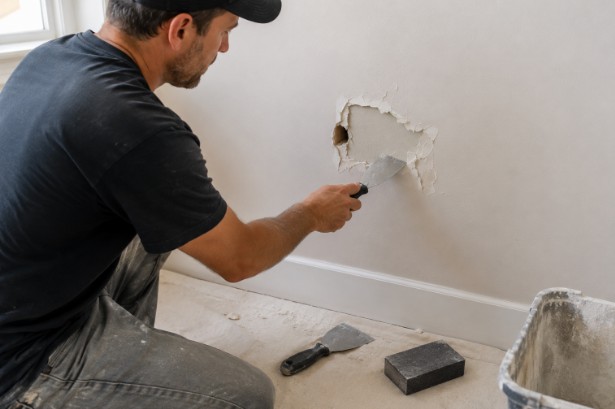
Remove loose drywall, clean off dirt and dust, trim rough edges and check for moisture. Patch material will not bond over debris, however good the product is.
2. Using the wrong materials
The usual errors are an undersized patch, a cheap product, the wrong tape and lightweight compound used on a deep repair. Match the material to the damage.
3. Applying too much compound
More compound is not smoother. It gives you uneven surfaces, longer drying times, extra sanding and a patch you can see. Several thin coats beat one thick one every time.
4. Rushing the drying
Sanding or painting before the compound has fully dried causes cracking, shrinking, uneven texture and poor coverage. Follow the drying time on the label, for every layer.
5. Poor sanding
Use fine-grit paper and inspect under good light. Over-sanding and under-sanding are equally common, and so is leaving the dust behind for the paint to find.
6. Not priming
Primer seals the repair, evens out the surface, improves adhesion and hides the patch. Skipping it is why so many repairs flash through the topcoat.
7. Ignoring the cause
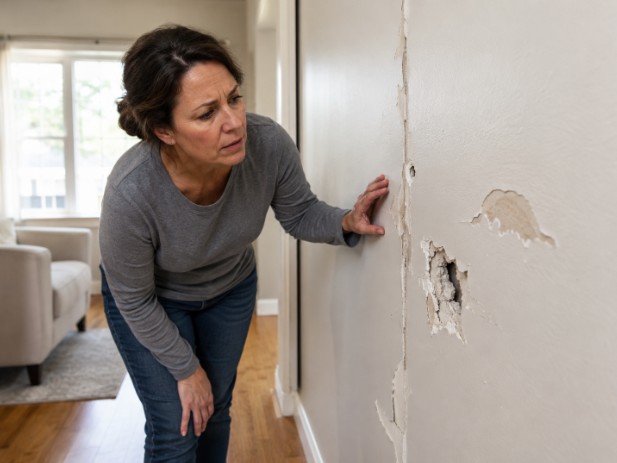
Plumbing leaks, roof leaks, excess moisture and foundation movement all keep working after you have filled the hole. Damage that comes back means the cause is still there.
8. Taking on too much
Small holes and dents are fine to do yourself. Large holes, ceiling damage, water-damaged board, extensive cracking and texture matching are worth handing over.