Why drywall repair should not wait
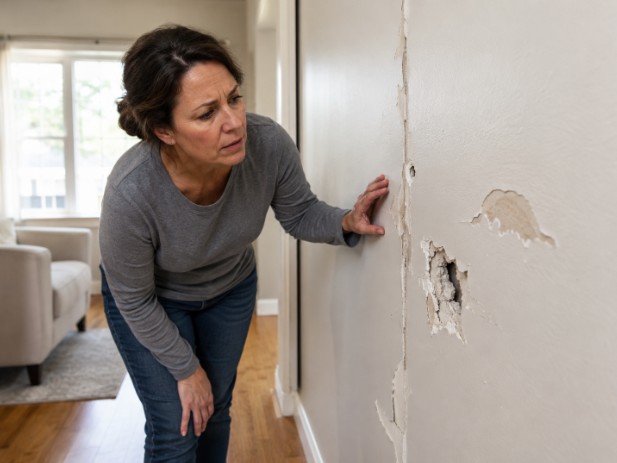
Cracks, stains and soft spots grow. Whatever caused them, moisture, movement or impact, is usually still working on the wall, and a patch you could have covered in an afternoon becomes a section that has to come out.
Large holes
A hole needs backing, patching, taping, sanding and texture matching. A patch with nothing behind it will sink or crack, no matter how neatly it was filled. The damaged section gets cut out, a strong patch is set in, and the edges are feathered until the repair disappears.
Water damage
Look for staining, bubbling paint, board that feels soft under your hand, and a musty smell. Find the source first, whether that is the roof, a pipe or a window, because closing the wall over an active leak just buys you a few months. Where mold is a possibility, the wall needs opening properly before anything is rebuilt.
Cracks that keep coming back
Recurring cracks near doors, windows, ceilings and corners come from settling, house movement or tape that failed under the surface. Filling them hides the problem for one paint cycle. The repair is to pull the loose tape, reset the seam and rebuild the layers.
Signs it is time to call someone
Large holes and deep dents, water stains or soft areas, cracks that return, loose tape, lumpy patches from a previous repair, damage near outlets, anything on a ceiling, and any texture you cannot match.
Why professional work looks better
Appearance is the hard part. A patch can be perfectly sound and still look rough, and bad blending shows up as raised spots, visible lines and uneven sheen once the paint goes on, most obviously in a room with natural light. Matching orange peel, knockdown or a smooth finish is a skill, not a product.
Repair before you repaint
Fresh paint makes cracks and rough patches more visible, not less. Have the wall looked at before the first coat goes on.